Understanding Guilt in Family Relationships
Why this question feels uncomfortable to even ask
Most people don’t sit down and clearly think, “I feel obligated to my family.”
What they feel is something more tangled.
They feel guilty for not calling enough.
Guilty for wanting space.
Guilty for feeling irritated when they “should” feel grateful.
And underneath all of that is a quieter, more uncomfortable thought:
If I love them, why does this feel like pressure?
That’s where the confusion begins. Because in many families, love and obligation are so closely tied together that separating them can feel almost disloyal.
When love starts to feel heavy
Healthy love has a certain quality to it. It allows closeness, but it also allows space. It doesn’t require you to constantly prove your care through sacrifice.
Obligation feels different.
It shows up as a sense that you should do something, even when you’re emotionally exhausted. It makes relationships feel like responsibilities you have to manage rather than connections you can return to.
The tricky part is that obligation often disguises itself as love.
You tell yourself, “I’m doing this because I care.”
But if you pause and look closely, the emotion underneath might not be warmth. It might be anxiety, guilt, or fear of disappointing someone.
That doesn’t mean there’s no love. It just means something else has become attached to it.
A simple way to tell the difference
Instead of trying to analyze the relationship as a whole, it helps to look at your internal response in specific moments.
Think about the last time your family asked something of you.
Did it feel like a choice you were willing to make, even if it required effort? Or did it feel like something you couldn’t really say no to, even if you wanted to?
Love usually allows for choice. Even when you say yes, it feels like your decision.
Obligation removes that sense of choice. You may still say yes, but it feels like you had no real alternative.
That distinction matters more than the action itself.
Where the guilt comes from
Guilt in family relationships doesn’t come out of nowhere. It’s usually learned, slowly and subtly.
In many families, approval is tied to compliance. Being “good” means being accommodating, respectful, and available. Over time, this creates an internal rule:
If I don’t meet expectations, I’m letting someone down.
That rule doesn’t disappear when you grow up. It just becomes quieter and more internal.
So even when no one is directly asking anything unreasonable, you still feel responsible. You anticipate reactions. You manage emotions that may not even be expressed.
This is why guilt can show up even in relatively calm families. It’s not always about what is happening now. It’s about what you’ve learned to expect.
How this plays out in everyday situations
This dynamic shows up in ways people often overlook.
You agree to plans even when you need rest, and then feel resentful afterward. You avoid difficult conversations because you don’t want to upset anyone. You find yourself explaining or justifying decisions that don’t actually require approval.
Over time, this creates a pattern where your needs become secondary, not because they don’t matter, but because they feel harder to prioritize.
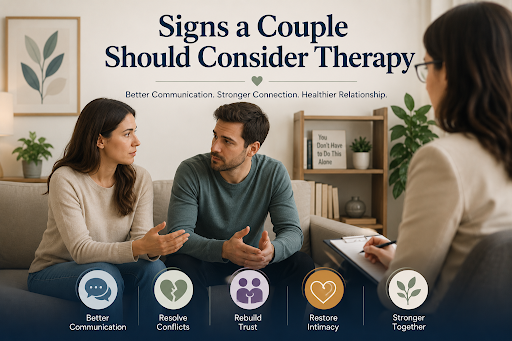
In relationships, this can also spill over. Many couples struggle not just with each other, but with the expectations that come from their families. It’s not uncommon for people to seek online couples counseling when the tension isn’t only between partners, but between the relationship and the family system around it.
Why “just set boundaries” doesn’t always work
Advice around boundaries is everywhere, and while it’s useful, it often misses something important.
Setting a boundary with a stranger is very different from setting one with family.
With family, you’re not just dealing with the present moment. You’re dealing with history, roles, expectations, and emotional patterns that have developed over years.
So when someone tries to set a boundary, the difficulty isn’t just in saying the words. It’s in managing what follows.
The guilt.
The second-guessing.
The fear that you’ve damaged the relationship.
This is why many people understand boundaries intellectually, but struggle to apply them consistently.
A more realistic way to approach it
Instead of trying to eliminate guilt completely, it can be more helpful to change how you respond to it.
Feeling guilty doesn’t automatically mean you’ve done something wrong. Sometimes it simply means you’re doing something differently than you’re used to.
Start by noticing when guilt shows up, and ask a different question:
Is this guilt coming from harming someone, or from not meeting an expectation?
Those are not the same thing.
If your actions are respectful but still uncomfortable for others, that discomfort does not automatically mean you’ve made the wrong choice.
When it starts affecting your well-being
There’s a point where this pattern moves beyond occasional discomfort and starts affecting your mental health.
You may feel constantly responsible for how others feel. You may struggle to relax because you’re always anticipating what’s expected of you next. You may feel emotionally drained after interactions that are supposed to feel supportive.
This is often when people begin exploring therapy for family conflicts, not because they don’t care about their family, but because they care enough to want a healthier way of relating.
In many cases, family therapy online can help unpack these patterns in a structured way, especially when direct conversations feel difficult or overwhelming.
What changes when you separate love from obligation
One of the most important shifts is this:
You stop measuring love by how much you sacrifice.
Instead, you begin to measure it by how honest and sustainable the relationship feels.
When obligation is reduced, something interesting happens. The resentment starts to fade. The interactions that remain begin to feel more genuine, not because you’re doing more, but because what you’re doing feels chosen.
This doesn’t mean relationships become perfect or conflict-free. It means they become more balanced.
A question worth sitting with
If you’re unsure where you stand, consider this:
If guilt wasn’t part of the equation, what would change about how you show up in this relationship?
That question can be uncomfortable, but it’s also clarifying.
Because the goal isn’t to love less. It’s to relate in a way that doesn’t require you to constantly override yourself.
What to take with you
You don’t have to reject your family to question certain patterns within it. You don’t have to choose between caring about others and caring about yourself.
Sometimes, the work is simply noticing where love ends and obligation begins.
And once you can see that clearly, you have more choice in how you respond.
If you find yourself stuck in that space, where every choice feels loaded with guilt, talking to someone outside the dynamic can help you see it more clearly. Whether through therapy for family conflicts or structured support like online couples counseling, the goal isn’t to distance you from your relationships, but to help you experience them with less pressure and more clarity.
Because love, at its healthiest, doesn’t feel like something you’re constantly trying to get right. It feels like something you can actually live inside.