
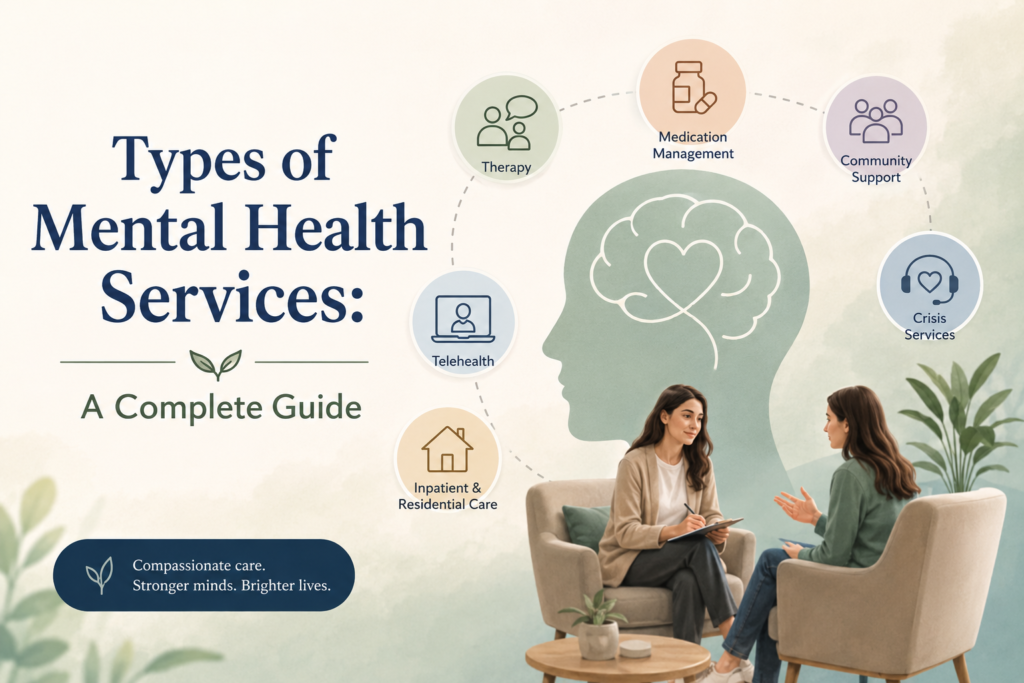
Mental health services include psychotherapy, medical management, community mental health services, hospital or residential treatment, crisis services, specialised services, and alternative therapy. These services provide essential support for your emotional and psychological well-being through their services and treatment provided by professionals who diagnose, treat, and provide medical treatment for different conditions.
Some of the common mental health conditions are depression, anxiety, and bipolar mood disorder. Each service provides different levels of care and support depending on an individual’s emotional, psychological, and behavioural health needs.
In this guide, you will get to know about different types of mental health services, things you should know to choose the right mental health services, and how you can find mental health services in Rhode Island.
The main types of mental health services at a glance
There are different types of mental health services provided by professionals such as psychiatrists, psychologists, community psychiatric nurses, social workers, and occupational therapists who work in a mental health team according to an individual’s needs.
- Psychotherapy (Talk Therapy): This involves individual or group sessions with a professional to share behaviours, emotions, and coping skills.
- Medication Management: It focuses on suggesting and monitoring the medical treatment of an individual.
- Outpatient Programs: It involves providing structured, scheduled treatment to an individual at their home.
- Inpatient and Residential Care: It offers 24/7 treatment in a hospital or specialised facility, and long-term recovery.
- Crisis Intervention Services: It provides immediate, short-term support through hotlines, mobile teams, or urgent care in emergencies.
- Community-Based Support: It includes support groups, case management, and rehabilitation services designed to help individuals in the local environment.
Outpatient mental health services
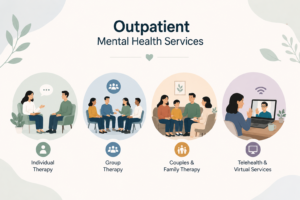
It is a type of mental health care that provides community-based services, which involve regular sessions with professional psychologists to focus on long-term wellness, symptom management, and personal growth without staying overnight in a hospital or facility, while you can maintain your daily routines. By providing these services, they ensure that mentally therapeutic resources are available to people at various stages of their mental health journey.
Individual therapy
Individual therapy, which is often called talk therapy, is a one-on-one process where a patient collaborates with a trained therapist regarding their personal concerns, involves diagnosing the problem and developing a care plan, and working while living at home. The session usually occurs once or twice a week for about 50 minutes. There are some common therapeutic approaches, such as cognitive behavioural therapy for changing negative thought patterns, dialectical behavioural therapy for emotion regulation, EMDR for trauma, and acceptance and commitment therapy for mindfulness. This therapy helps in managing severe stress, burnout, grief, anger, and low self-esteem.
Group therapy
This therapy involves one or more clinicians which helps in supporting a small group of individuals to share similar experiences, and everyone will get mutual support from people dealing with similar problems, and unlike individual therapy, it reduces isolation and offers interpersonal support. It is the best option for those who don’t want to feel isolated in their struggles or want to improve their interpersonal skills. It works for a wide range of psychiatric, emotional, and many other conditions, specifically depression and bipolar disorder.
Couples and family therapy
These services are designed for partners facing frequent arguments, healthy couples wanting to strengthen their bond, parents and children struggling with behavioural issues, families having major life changes such as divorce, relocation, or a new baby, and individual support in a specific condition like depression, anxiety, or an eating disorder. While individual therapy only focuses on personal growth and self-awareness, this therapy ensures that improving communication and changes group patterns. You can expect a professional to have a neutral environment where the therapist will help to identify toxic patterns and resolve conflicts.
Telehealth and virtual mental health services
Virtual care has seen massive growth as it provides a therapy for those who don’t have access because they live in remote areas or have restrictive schedules. It is best for those individuals who want private mental health care at home in comfort or who have few symptoms of anxiety, depression, or ADHD. If you are looking for mental health services in Rhode Island, you have to ensure that the telehealth provider uses a HIPAA-compliant platform, and are licensed in your specific state, and has specialisation according to specific needs.
Why Your Doctor Treats the Disease but Not the Person Falling Apart Inside
Intensive outpatient and partial hospitalization programs
An intensive outpatient program is a high-quality treatment program for improving mental health, helping participants learn from others facing similar challenges, and supporting individuals while they can maintain daily responsibilities. This is designed for those individuals who need more than one hour of therapy per week while maintaining work or commitments. These programs typically involve 9 to 13 hours of treatment, which will last 5 to 6 weeks. The primary focus is on group therapy, individual sessions and medical management. It is best suited for drug & alcohol addiction, moderate depression, or an eating disorder that requires intensive therapy
A partial hospitalisation program is the high-intensive form of outpatient care and addiction treatment program where patients receive daily group therapy, individual psychotherapy, family therapy and medication management by a psychiatrist. It is a short-term program for 5 to 6 hours a day and five days a week, and it is often called a day treatment program in which no overnight staying is required. The level of care is designed for individuals with severe mental health disorders who are at risk of hospitalisation, and people needing an environment for recovery.
Inpatient and residential mental health treatment
Inpatient care is the short-term and most intensive level of psychiatric service, designed for acute care within a hospital to stabilise dangerous symptoms. It takes place in a secure hospital ward where patients receive 24-hour care and nursing supervision. This is usually a short-term treatment, lasting 3 to 7 days, and the primary goal is to provide safety and immediate symptom reduction. It is best for individuals who are an immediate danger to themselves or others, or those experiencing a complete inability to care for their basic needs due to a mental health emergency.
Residential treatment is a treatment that provides a 24-hour, home-like environment for individuals with conditions like depression, bipolar disorder, and severe anxiety, and it focuses on long-term recovery and is designed for healing rather than emergency help. Residents provide a highly structured daily schedule of individual therapy, group work, and life-skills training. This treatment has a duration of 30 to 90 days, but some programs last longer. It is ideal for individuals with complex, chronic conditions such as severe PTSD, an eating disorder, or people who do not have a stable or supportive home environment to facilitate better recovery.
Community-based and crisis mental health services
Crisis hotlines and mental health urgent care centres provide immediate, short-term support for individuals experiencing acute psychological distress. These organisations are typically run by non-profits or government agencies and staffed by trained counsellors. If someone is feeling overwhelmed, experiencing suicidal thoughts, or in the middle of a panic attack, they can use these services without a hospital visit
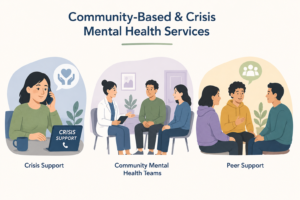
Community mental health teams are groups including psychiatrists, nurses, and social workers who provide care to people with complex mental health needs living in the community. It is often run by the local government health department, and these teams offer counselling, medication management, and walk-in crisis services. They are ideal for individuals with chronic conditions like schizophrenia or bipolar disorder who require ongoing medical oversight to stay stable outside of a clinical facility.
Peer support involves a group of individuals who have experienced mental health challenges, providing mentorship and emotional support to others. These programs are often run by community organisations or advocacy groups like NAMI. It is best used as a supplement to professional therapy and focuses on empowering individuals and fostering social connections.
Is It a Toxic Workplace or Am I Overreacting?
Mental health medication management
Medication management is a clinical service focused on the prescribing and monitoring of psychiatric drugs to manage symptoms. This care is provided by psychiatrists or psychiatric nurse practitioners. Unlike therapists, these providers evaluate the biological components of mental illness and provide medicine to ensure efficacy while minimising side effects. Here are some common types of psychiatric medications:
- Antidepressants: It is used to balance neurotransmitters that affect mood and emotional response.
- Anti-anxiety Medications: It is a fast-acting drugs that help to reduce the physical and mental symptoms of severe anxiety or panic.
- Mood Stabilisers: It is primarily used to manage the high and lows associated with conditions like bipolar disorder.
- Antipsychotics: It is designed to manage symptoms of psychosis, such as hallucinations or delusions, and are sometimes used to improve other treatments.
It is important to know that medication is a tool to be used alongside psychotherapy, not in place of it, because medication can stabilise a person’s biology, and therapy provides the long-term recovery to cure the problem.
How to choose the right mental health service
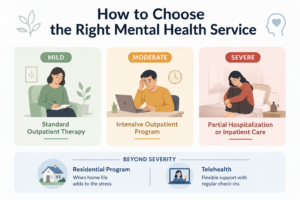
- Choosing the right service depends on how much your symptoms interfere with your ability to function in daily life. Here is the simple guide according to symptom severity:
- Mild: If you are generally doing your responsibilities but feeling off, anxious, or stressed, standard outpatient therapy is the best starting point. It involves weekly sessions to build coping skills without disrupting your daily life.
- Moderate: If you are having difficulty focusing at work, maintaining relationships, or getting through a day, an intensive outpatient program will provide a necessary boost. It involves several hours of therapy a week while sleeping in your own bed.
- Severe: If you can’t work, care for yourself, or feel a loss of hope, a partial hospitalisation program or inpatient care is appropriate because it provides a safe, supervised environment to stabilise.
- Beyond severity: If your home life is a main reason for you stressing, then a residential program might be better, and if you have a busy schedule but need constant check-ins, telehealth offers it in the most flexible way.
The Difference Between One-to-One Therapy, Couple Therapy, and Family Counseling
What is the 3-3-3 rule in mental health?
The 333 rule is an informal coping technique that can effectively manage anxiety when it feels particularly overwhelming. It involves observing 3 things you see, 3 sounds you hear, and moving 3 body parts. You can use it to redirect attention away from physical symptoms, to interrupt overthinking while in a crowded or stressful environment or before a big presentation or a difficult conversation, to regain emotional control.
Finding mental health services in Rhode Island
finding the right mental health services in the ocean state requires a practical approach. To find local providers, start with the Rhode Island Department of Behavioral Healthcare (BHDDH) database or use reputable insurance directories. When you are choosing between providers, you should consider your needs such as private practice offers specialized, consistent care with shorter wait times but may have higher cost and Community Care is best for comprehensive support, though it has high demand which can impact scheduling.
Choosing the right mental health service is a deeply personal decision that should reflect your unique history, current symptoms, and long-term goals. What works for one person may change as their needs evolve over time. If you’re feeling unsure of where to begin, reaching out for a professional evaluation can help clarify which level of care is best for you. Finding a practice that aligns with your values is the first step toward sustainable wellness.
Frequently Asked Questions
Do you accept my specific Rhode Island insurance plan?
Coverage for therapy services can vary depending on your insurance provider and plan. If you’re looking for individual therapy in Rhode Island or family counseling services, we recommend contacting us directly so we can help verify your benefits and explain available options. We’re happy to guide you through the process and answer questions about coverage for in-person or family therapy online sessions.
Are you currently taking new patients for my specific concern?
Yes, we welcome new clients for a range of concerns, including anxiety, depression, relationship stress, Family of origin issues, grief, life transitions, and therapy for family conflicts. We also provide support for concerns related to self-confidence, Career counseling, caregiving stress, and emotional overwhelm. Availability may vary depending on the type of support you’re seeking, but we’ll do our best to match you with the right therapist and appointment schedule.
What is your typical wait time for an initial intake appointment?
Initial appointments are usually available within a few days to two weeks, depending on scheduling and the type of service requested. We understand that reaching out for support can already feel difficult, so we aim to make the process as smooth and timely as possible. Whether you’re seeking individual therapy online, one-to-one therapy, or working with a counselor for family problems, we’ll help you get started with clarity and support.
Do you offer telehealth options for follow-up sessions?
Yes. We offer secure and convenient telehealth options for both new and existing clients. Individual therapy online, online couples counseling, and family therapy online sessions are available for clients who prefer the comfort and flexibility of attending therapy from home. Online sessions are designed to provide the same level of care, structure, and confidentiality as in-person appointments.