

The right therapist for divorce depends on what you’re actually dealing with. If you’re processing the breakup on your own, an individual therapist specializing in divorce and life transitions is usually the right fit. If kids or co-parenting are part of the picture, a marriage and family therapist often makes more sense.
This isn’t a one-size-fits-all decision, and picking the wrong type of support can leave you feeling like therapy isn’t working when really, it just wasn’t matched to what you needed. Here’s how to think through it.
What Does a Divorce Therapist Actually Do?
Divorce therapy isn’t one fixed thing. For some people, it’s individual sessions focused on grief, anger, or figuring out who they are outside the marriage.
For others, it includes co-parenting sessions with an ex, or family counseling when kids are struggling to adjust.
The starting point isn’t the divorce itself. It’s what the divorce is doing to you, your kids, or your family right now. That’s what determines which kind of therapist actually helps.
Types of Therapists Who Work With Divorce
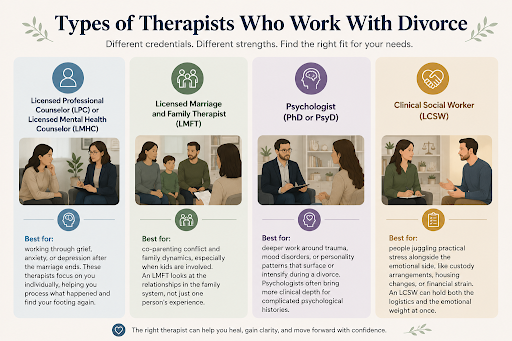
Here’s a quick breakdown of the different credential types and who they tend to be the right fit for.
Licensed Professional Counselor (LPC) or Licensed Mental Health Counselor (LMHC)
Best for: working through grief, anxiety, or depression after the marriage ends. These therapists focus on you individually, helping you process what happened and find your footing again
Licensed Marriage and Family Therapist (LMFT)
Best for: co-parenting conflict and family dynamics, especially when kids are involved. An LMFT looks at the relationships in the family system, not just one person’s experience.
Psychologist (PhD or PsyD)
Best for: deeper work around trauma, mood disorders, or personality patterns that surface or intensify during a divorce. Psychologists often bring more clinical depth for complicated psychological histories.
Clinical Social Worker (LCSW)
Best for: people juggling practical stress alongside the emotional side, like custody arrangements, housing changes, or financial strain. An LCSW can hold both the logistics and the emotional weight at once.
Read More Blog : Therapy for Mental Health Issues
What Type of Therapy Works Best for Divorce?
Who you see matters, but how the therapy is structured matters too. A few approaches show up often in divorce recovery.
Cognitive behavioral therapy (CBT) helps with the anxious, looping thoughts that tend to show up after a divorce, things like replaying old arguments or catastrophizing about the future.
Narrative therapy focuses on rebuilding your sense of identity, which is especially useful for women who built a lot of their self-image around their marriage or role as a spouse.
Solution-focused therapy is more short-term and practical, good for people who already know they’re struggling but want clear next steps instead of open-ended processing.
Mindfulness-based approaches help with the day-to-day grief and stress that can otherwise feel constant in the months after a divorce.
The specific approach matters less than finding a therapist who tailors treatment to your situation and goals.
None of these are exclusive. Therapists often blend a few of these approaches depending on where you are in the process.
How Divorce Therapy Helps Women Rebuild Self-Confidence

Divorce hits differently depending on what you built your identity around. Women who were financially dependent, in long marriages, or who centered a lot of their daily life around being a spouse often face a specific kind of confidence crisis after divorce, separate from grief alone.
It’s not just sadness. It’s not knowing who you are without the role you’ve played for years, and sometimes not trusting your own judgment after a relationship that didn’t work out the way you expected.
Therapy helps here in a few specific ways. Narrative work helps separate who you are from the marriage that ended.
Self-compassion exercises help quiet the self-blame that tends to creep in, even when the divorce wasn’t really about anything you did wrong.
And over time, sessions shift toward practical goal-setting, helping restore a sense of direction and independence that may have gotten lost.
Read More Blog : What Is Family Therapy
When to See a Family Divorce Therapist
Sometimes the divorce isn’t just a two-person issue. A few signs it’s time to bring family into the picture:
Your child is showing signs of distress, withdrawal, or behavior changes that started around the separation. Communication with your co-parent keeps breaking down, even over basic logistics. The whole household feels unstable, not just the adults.
In any of these cases, a family therapist works with the relationships involved instead of just one person’s experience of the divorce.
The Biggest Mistake People Make When Choosing a Divorce Therapist
The most common mistake is matching the wrong type of therapist to the actual problem. Seeing a couples therapist when you need individual support, or going the individual route when the real conflict is happening between co-parents.
The second mistake is skipping the vetting step. Not every therapist works with divorce specifically. And general talk therapy doesn’t always cover the legal, financial, and identity pieces that come with it.
It’s worth asking directly if divorce or life transitions is something a therapist actually specializes in before booking.
What to Expect in Post-Divorce Therapy
Early sessions usually focus on the immediate aftermath, working through grief, anger, or the shock of the situation, even when the divorce was expected or mutual.
As sessions continue, the focus tends to shift toward identity and coping. This is where narrative work, communication skills, and co-parenting strategies usually come in, depending on the situation.
Later sessions look forward instead of back. This phase is about regaining confidence, figuring out what you want next, and starting to think about life beyond the divorce instead of just recovering from it.
How to Find the Right Divorce Therapist for You
A few things worth checking before booking a first session.
Look for someone who lists divorce or life transitions as an area they specialize in, not just general therapy. Make sure their credentials match your actual need: an LMFT for family or co-parenting work, an LPC or LMHC for individual support.
Schedule an initial consultation first; fit matters more than credentials alone. And ask directly how they approach divorce recovery, since two therapists with the same license can work very differently.
Finding the Right Support Changes What Comes Next
Divorce changes a lot at once: your routine, your identity, sometimes your entire support system. The right therapist doesn’t just help you get through it. If you’re unsure which type of therapist is right for your situation, Integrated Counseling Services can help you find the right fit.
Their licensed therapists work with individuals, co-parents, and families navigating divorce through practical, personalized support. Schedule a consultation to discuss what comes next.