

Deciding to seek therapy is a meaningful step but with so many approaches and terminology, it can feel overwhelming before you even make that first call. This guide walks you through the most common types of therapy for mental health issues, who each one helps most, and how to identify the right starting point for your situation.
What Is Mental Health Therapy?
Mental health therapy also called psychotherapy or talk therapy is a structured, collaborative process between you and a trained professional. The goal is to help you understand your thoughts and emotions, shift patterns of behavior that aren’t serving you, and build practical coping skills for everyday life.
Therapy is not just “talking about your feelings.” It’s a goal-oriented process guided by evidence-based methods, tailored to your specific concerns and adjusted as your needs change. It’s also worth noting the distinction between therapy and psychiatry: therapists use conversation-based methods to support mental wellness, while psychiatrists are medical doctors who evaluate and prescribe psychiatric medication. Many people benefit from both working together and if you’ve ever felt like your doctor is treating your symptoms without addressing the full weight of what you’re carrying, this piece on why doctors treat disease but not the person is worth a read.
Most therapists don’t apply a single rigid method they draw on a combination of approaches based on what you’re experiencing and what’s working.
Read More Here: What Is Family Therapy
Different Types of Therapy for Mental Health Issues
Below are the most widely practiced and evidence-supported forms of therapy. Each one has a different focus and works best for different situations understanding the distinctions helps you have a more informed conversation with a potential therapist.
Most Widely Used
1. Cognitive Behavioral Therapy (CBT)
What it is: CBT is based on the idea that your thoughts, feelings, and behaviors are interconnected. When negative or distorted thought patterns take hold “I always fail,” “No one likes me” they influence how you feel and how you act. CBT helps you identify those patterns and actively reframe them into more realistic, balanced ones.
Working one-on-one with your therapist through individual counseling, you’ll explore the thoughts that lead to self-destructive feelings and actions, then learn techniques to interrupt and change those cycles. It’s structured, practical, and goal-oriented sessions involve active exercises, not just reflection.
Best For
Anxiety disorders, depression, OCD, phobias, panic attacks
Typical Duration
12–20 sessions (short-to-medium term)
What to Expect
Structured sessions with homework exercises between appointments
Good to Know
Often combined with other therapies; evidence base is among the strongest of any approach
2. Dialectical Behavior Therapy (DBT)
What it is: Originally developed from CBT, DBT was designed specifically for people who experience emotions intensely and struggle to regulate them. Where CBT focuses on changing thoughts, DBT adds a layer: learning to accept difficult emotions as they are, while also building skills to manage them. The word “dialectical” refers to this balance of acceptance and change at the same time.
DBT teaches four core skill sets: mindfulness (staying present), distress tolerance (surviving a crisis without making it worse), emotion regulation (understanding and managing strong feelings), and interpersonal effectiveness (communicating needs without damaging relationships).
Best For
Borderline personality disorder, self-harm, intense emotional dysregulation, severe trauma, suicidal ideation
Typical Duration
6 months to 1 year; often includes group skills training alongside individual sessions
What to Expect
Both individual therapy and structured group sessions teaching specific skills
Good to Know
Particularly effective for people with multiple co-occurring mental health conditions
3. Psychodynamic Therapy
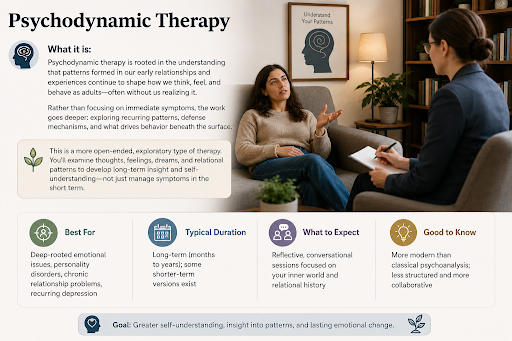
What it is: Psychodynamic therapy is rooted in the understanding that patterns formed in our early relationships and experiences continue to shape how we think, feel, and behave as adults often without us realizing it. Rather than focusing on immediate symptoms, the work goes deeper: exploring recurring patterns, defense mechanisms, and what drives behavior beneath the surface.
This is a more open-ended, exploratory type of therapy. You’ll examine thoughts, feelings, dreams, and relational patterns to develop long-term insight and self-understanding, not just manage symptoms in the short term.
Best For
Deep-rooted emotional issues, personality disorders, chronic relationship problems, recurring depression
Typical Duration
Long-term (months to years); some shorter-term versions exist
What to Expect
Reflective, conversational sessions focused on your inner world and relational history
Good to Know
More modern than classical psychoanalysis; less structured and more collaborative
Read More Here: Is It Love or Obligation?
4. Humanistic / Person-Centered Therapy
What it is: Person-centered therapy operates from the belief that you have the capacity to grow, heal, and make wise decisions when given the right environment to do so. Rather than directing the process, the therapist provides unconditional positive regard, a non-judgmental, empathetic space in which you lead the conversation and discover your own answers.
This approach emphasizes your inherent worth and potential rather than diagnosing what’s “wrong.” It’s particularly effective for those who have felt judged, misunderstood, or dismissed.
Best For
Low self-esteem, identity struggles, life transitions, personal growth, grief
Typical Duration
Flexible; can be short- or long-term depending on goals
What to Expect
Warm, client-led sessions; therapist reflects and supports rather than prescribes
Good to Know
Often integrated into other therapy styles; works well alongside CBT or psychodynamic approaches
Trauma-Specialized
5. Trauma-Focused Therapy (EMDR & TF-CBT)
What it is: Traumatic experiences whether a single event or years of chronic stress can get stuck in the nervous system in ways that normal conversation can’t always reach. Trauma-focused therapies are specifically designed to help the brain process and integrate those memories so they lose their emotional charge.
EMDR (Eye Movement Desensitization and Reprocessing) uses bilateral stimulation typically guided eye movements to help the brain reprocess traumatic memories the way it would naturally during REM sleep. Trauma-Focused CBT (TF-CBT) combines cognitive techniques with gradual, controlled exposure to trauma-related material in a safe therapeutic environment.
Best For
PTSD, childhood trauma, sexual or physical abuse, grief, accident survivors, combat veterans
Typical Duration
8–25 sessions for EMDR; longer for TF-CBT depending on complexity
What to Expect
Structured protocols; may feel different from traditional talk therapy that’s intentional
Good to Know
Traumatic experiences can freeze emotional development; processing them is essential, not optional
6. Interpersonal Therapy (IPT)
What it is: IPT focuses specifically on the quality of your relationships and how they affect your mental health and vice versa. It’s based on the understanding that depression, anxiety, and other conditions often emerge or worsen in the context of relationship problems, grief, role transitions, or unresolved conflict.
You’ll examine your social interactions, identify negative communication patterns, and learn to express your needs and emotions more effectively. IPT is structured and time-limited, making it a good fit for people who want a clear framework and a defined endpoint.
Best For
Depression linked to relationship issues, grief, major life changes, social isolation
Typical Duration
12–16 sessions (short-term, structured)
What to Expect
Clear goals set early; consistent focus on relationships and communication each session
Good to Know
One of the most researched short-term therapies for depression
Struggling with whether a relationship is giving as much as it’s taking? This may resonate: Is It Love or Obligation?
7. Solution-Focused Brief Therapy (SFBT)
What it is: Unlike approaches that explore the root causes of problems, SFBT focuses entirely on where you want to go not where you’ve been. The therapist helps you identify strengths and coping skills you already have, and builds on those to move you toward your goals. The past is only relevant if it contains something useful for the future.
SFBT is particularly effective for people who feel they have the internal resources to cope but aren’t sure how to activate them. Sessions are practical and forward-focused.
Best For
Goal-oriented individuals, situational stress, people who prefer a practical approach
Typical Duration
6–10 sessions (brief by design)
What to Expect
Conversations focused on desired outcomes and what’s already working in your life
Good to Know
Works best for those with a stable foundation; not ideal as a standalone for complex trauma
8. Motivational Enhancement Therapy (MET)
What it is: MET is designed for people who feel ambivalent about change who know on some level that they need help, but aren’t yet convinced or ready to commit to it. Rather than telling you what to do differently, the therapist helps you explore your own values and goals, and gently guides you to your own conclusions about what needs to change and why.
The change impulse comes from within the therapist, facilitates, not directs. This makes MET uniquely effective for situations where resistance or reluctance is part of the presenting challenge.
Best For
Addiction and substance use, eating disorders, people resistant to traditional therapy
Typical Duration
1–4 sessions (often used as an entry point before transitioning to another approach)
What to Expect
Reflective conversations; therapist listens more than advises; no pressure to commit immediately
Good to Know
Commonly paired with CBT or addiction-specific programs for sustained results
9. Somatic / Body-Based Therapy
What it is: Somatic therapy recognizes something that traditional talk therapy sometimes overlooks: trauma, stress, and emotional pain are not just mental events; they are stored physically in the body. Tension, chronic pain, shallow breathing, and physical numbness can all be expressions of psychological distress.
Somatic approaches use breathwork, body awareness exercises, and mindful movement to help you tune into physical sensations and release stored emotional tension. The body becomes part of the healing process, not just a container for it.
Best For
Chronic trauma, anxiety with physical symptoms, chronic pain, stress-related illness
Typical Duration
Varies widely; often integrated into other approaches rather than used alone
What to Expect
A therapist who pays attention to body language, posture, and physical sensations alongside verbal content
Good to Know
Particularly useful when talk therapy alone hasn’t fully resolved trauma symptoms
Who Can Benefit from Therapy?
A common misconception is that therapy is only for people in crisis or those with a formal diagnosis. In reality, therapy is valuable across a much wider range of situations:
- People experiencing anxiety, depression, trauma, grief, or burnout
- Individuals navigating major life transitions divorce, job loss, relocation, retirement
- Those struggling with relationship conflict, communication patterns, or family dynamics
- People who want to understand themselves better, build confidence, or work through past experiences
- Anyone who feels persistently off, stuck, or like something isn’t quite right even without a clear label
You don’t have to be at a breaking point to benefit from therapy. The earlier you engage with support, the more tools you have before a difficult period becomes a crisis. If you’ve been second-guessing whether the stress you’re feeling at work is normal or something worth addressing, this related read may help: Is It a Toxic Workplace or Am I Overreacting?
Individual, Group, and Family Therapy: What’s the Difference?
Beyond the therapeutic approach itself, the format of therapy matters too. There are three primary structures:
- Individual therapy One-on-one sessions between you and your therapist. The deepest form of personal work, with the full session dedicated to your specific concerns, history, and goals.
- Group therapy A therapist-led session with a small group of individuals, typically focused on a shared theme (anxiety, grief, addiction recovery, etc.). Group settings reduce isolation, provide peer perspective, and build interpersonal skills in a safe environment.
- Couples and family therapy Focuses on the relationship dynamic rather than one individual. Useful for communication breakdown, parenting conflicts, major life transitions affecting a family unit, or when one person’s mental health challenges ripple into family life. Learn more about our family therapy services or read our deeper explainer on what family therapy actually involves.
These formats are not mutually exclusive; many people attend individual therapy and a support group simultaneously, or transition between formats as their needs evolve. If you’re weighing which format makes the most sense for your situation, our guide on the difference between individual, couples, and family therapy breaks it down clearly.
Which Type of Therapy Is Right for Me?
The honest answer is that most therapists work integratively; they draw from multiple approaches based on what’s working for you. You don’t need to arrive with a specific method in mind. What matters is starting the conversation.
That said, the following quick-match framework can help orient your thinking:
| If you’re dealing with… | Consider starting with… |
|---|---|
| Anxiety, worry, or panic | CBT or IPT |
| Depression (mild to moderate) | CBT, IPT, or Person-Centered Therapy |
| Trauma or PTSD | EMDR or Trauma-Focused CBT |
| Intense emotional dysregulation or self-harm | DBT |
| Relationship or communication problems | IPT or Couples Therapy / Family Therapy |
| Addiction or resistance to change | MET (Motivational Enhancement Therapy) |
| Low self-esteem or identity concerns | Person-Centered / Humanistic Therapy |
| Physical symptoms tied to stress or trauma | Somatic Therapy |
| Goal-focused, prefer a practical short-term approach | SFBT or CBT |
| Deep-rooted patterns or recurring life themes | Psychodynamic Therapy |
A good therapist will assess your needs early on and adjust their approach accordingly. The most important step is simply getting started not picking the “perfect” method before your first session.
How to Choose the Right Level of Care
Therapy exists on a spectrum of intensity. Choosing the right level depends on how much your symptoms are affecting your ability to function day-to-day:
Mild Symptoms
Feeling off, anxious, or stressed but meeting your daily responsibilities. Standard outpatient therapy (weekly sessions) is the ideal starting point.
Moderate Symptoms
Difficulty focusing at work, maintaining relationships, or getting through the day. An Intensive Outpatient Program (IOP) several hours of therapy per week provides a stronger structure while you sleep at home.
Severe Symptoms
Unable to work, care for yourself, or feeling a loss of hope. Partial Hospitalization (day programs) or inpatient care provides a supervised, structured environment to stabilize.
Need Flexibility
Busy schedule, remote location, or prefer privacy at home. Telehealth therapy delivers the same quality of care through secure video sessions available for individual, couples, and family formats.
What to Expect in Your First Therapy Session
The first session often called an intake or evaluation is less about diving into deep work and more about getting to know each other. Your therapist will ask about what brought you in, your history, current symptoms, and what you’re hoping to get out of therapy. You’ll have space to ask your own questions too.
A few things worth knowing before you go:
- Confidentiality is a core principle. What you share stays between you and your therapist, with limited legal exceptions (such as imminent risk of harm to yourself or others).
- Sessions typically run 50–60 minutes.
- You won’t feel “fixed” immediately and that’s completely normal. Therapy is a process, not an event. Most people begin to notice meaningful shifts after 4–8 sessions.
- Fit matters. If after a few sessions you don’t feel a working connection with your therapist, it’s okay to say so or to look for someone else. A strong therapeutic relationship is one of the strongest predictors of good outcomes.
Frequently Asked Questions About Therapy for Mental Health
How do I know if I need therapy?
If your thoughts, emotions, or behaviors are making it harder to function in daily life at work, in your relationships, or in your own head therapy is worth exploring. You don’t need a diagnosis or a crisis to start. Reaching out for an evaluation is always a reasonable first step.
How long does therapy take to work?
It depends on the type of therapy and the nature of your concerns. Short-term structured approaches like CBT or SFBT often show results within 8–16 sessions. Deeper work processing longstanding trauma or complex patterns may take months or longer. Your therapist should be able to give you a realistic sense of the timeline early on.
What is the difference between a therapist, psychologist, and psychiatrist?
Therapists (including licensed counselors, clinical social workers, and marriage and family therapists) provide talk therapy. Psychologists have doctoral-level training and can conduct psychological testing in addition to therapy. Psychiatrists are medical doctors who specialize in diagnosing mental health conditions and prescribing medication. Many people benefit from seeing a therapist and psychiatrist together.
Is therapy covered by insurance?
Many insurance plans cover mental health services, especially since the Mental Health Parity and Addiction Equity Act requires comparable coverage to physical health. Coverage varies by plan. It’s best to contact your provider directly or ask a practice to verify your benefits for you.
Can therapy be done online?
Yes. Telehealth therapy has expanded significantly in recent years and provides the same level of care, structure, and confidentiality as in-person sessions just through a secure video platform. It’s an excellent option for people with busy schedules, limited transportation, or a preference for privacy at home. Ensure your provider is licensed in your state and uses a HIPAA-compliant platform.
What if therapy doesn’t help?
Therapy not working can mean different things: the approach may not be the right fit, the therapist-client relationship may need recalibrating, or additional support (like medication management alongside therapy) may be needed. It’s not a sign that you’re beyond help, it’s useful information. Talking openly with your therapist about what isn’t working is part of the process.
Do you accept Rhode Island insurance plans?
Coverage varies depending on your insurance provider and specific plan. We recommend contacting us directly so we can help verify your benefits and walk you through available options including both in-person and telehealth sessions.
What is your typical wait time for an initial intake appointment?
Initial appointments are typically available within a few days to two weeks, depending on scheduling and the type of support you’re seeking. We aim to make the process as smooth and timely as possible. Reaching out is already the hardest part.
Ready to Start? We’re Here in Rhode Island.
Integrated Counseling Service provides individual, group, couples, and family therapy for adults across Pawtucket, RI and the surrounding Massachusetts area.
Whether you’re navigating anxiety, depression, relationship challenges, trauma, or a difficult life transition, we’ll help you identify the right starting point and build a care plan from there.